
Can an Independent Celebrant Legally Marry You in England? The Truth About Marriage Law Reform

It's probably the question I'm asked more than any other.
"Can you actually marry us?"
The short answer?
Not legally. Not yet.
The slightly longer answer is much more interesting.
Because England and Wales are on the cusp of what could become the biggest change to wedding law in almost 200 years, and if the proposed reforms go ahead, they could completely change the way couples get married.
If you're dreaming of a woodland wedding, a beach ceremony, your family garden or your favourite restaurant, this is why people in the wedding industry keep talking about "marriage reform". So, let's unpack it.
How does getting married work at the moment?
At the moment, if you want to be legally married in England or Wales, your options are surprisingly limited.
Your legal marriage must be carried out by:
a registrar
an authorised religious officiant
An independent celebrant (like me) can't currently complete the legal marriage.
That means most of my couples do one of two things:
They either have a simple legal ceremony at their local registry office a few days before the wedding, making a stylish event out of the paperwork signing a-la-Dua Lipa.
...or they choose a venue where the registrar conducts the legal paperwork before I lead the personalised ceremony.
For most couples, the legal bit lasts around ten minutes and working with a registrar can be a very lack lustre experience.
The meaningful bit? That's where I come in.
If you're wondering how the two differ, I've written a full guide to Celebrant vs Registrar: What's the Difference?
So... why do people still choose a celebrant?
Because getting married and getting legally married aren't quite the same thing.
The legal ceremony confirms your marriage. Your celebrant ceremony celebrates it.
Instead of reading from a prescribed legal script, I spend months getting to know you. I learn your love story. Your people. The ridiculous way you met. Your dreams and inside jokes. The challenges you've overcome. The things that make everyone in the room think,
"That is so them."
Why is the law changing?
Here's the slightly bonkers part.
Much of the law governing weddings in England and Wales is rooted in legislation dating back to 1836.
Since then...Women have gained the vote. The internet happened. Same-sex marriage became legal. People can legally get married in football stadiums, castles and converted barns.
But independent celebrants still can't legally marry couples.
You can see why many people think the law has struggled to keep pace with modern life.
What is marriage law reform?
In 2022, the Law Commission published a comprehensive review of wedding law after several years of consultation.
Rather than regulating buildings, it recommended regulating the person conducting the ceremony.
In reality, it's a huge shift. Instead of asking:
"Is this venue licensed?" The question becomes: "Is this officiant authorised?"
That single change could open up far more choice for couples over where and how they marry.
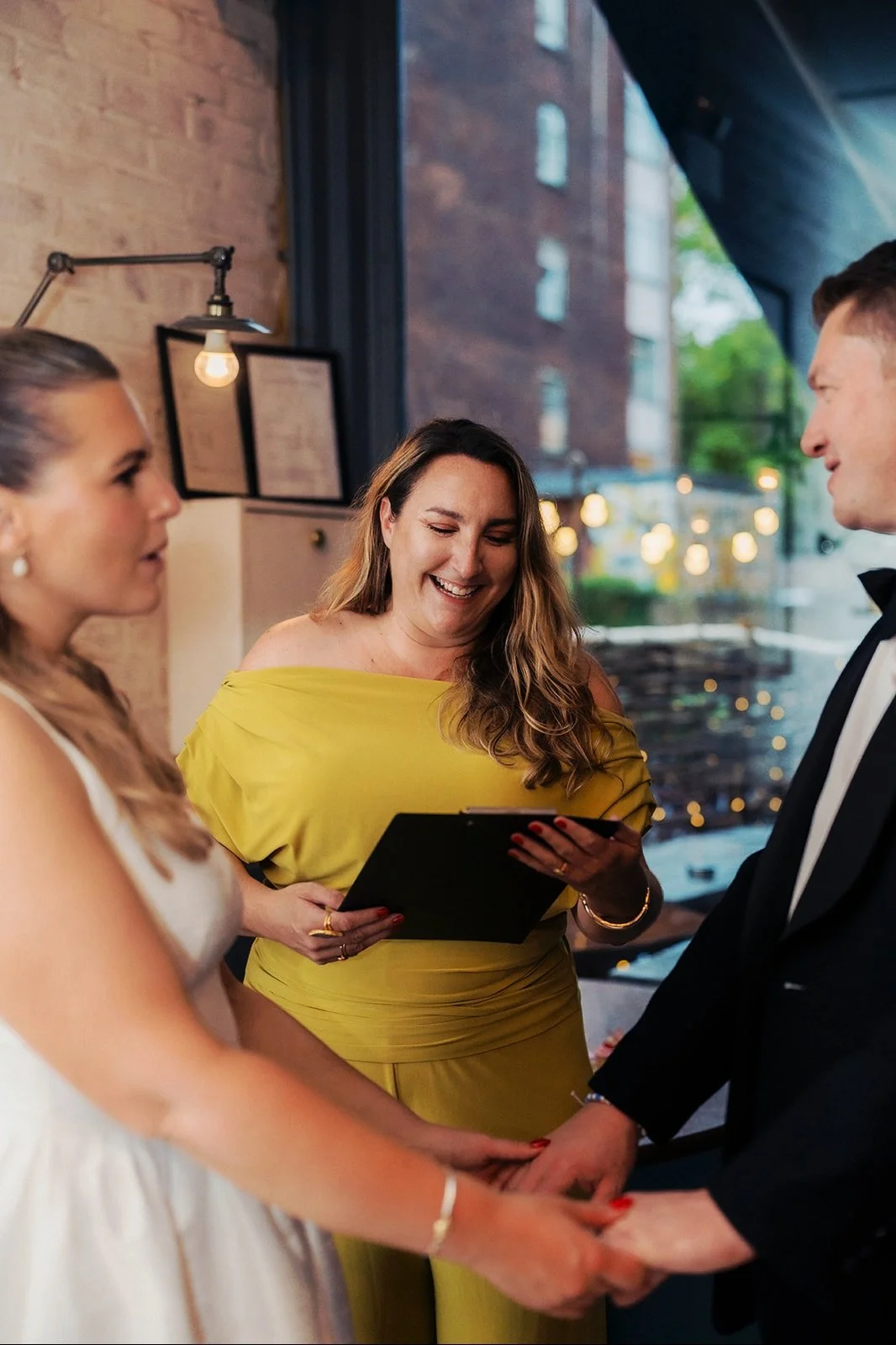
Does that mean independent celebrants will definitely be able to legally marry couples?
Not yet, and it's important to be honest about that.
The Government has confirmed that it intends to reform weddings law and has committed to consulting on whether independent celebrants should be authorised to conduct legally binding marriages. But that consultation and any resulting legislation are still part of an ongoing process, so the final outcome isn't guaranteed.
So today, if you're planning your wedding, you should still expect to complete the legal formalities through the current system.
Why so many celebrants are hopeful
If independent celebrants are eventually included in the new framework, it could mean couples would only need one ceremony.
One set of vows. One moment. One celebration. Exactly as they imagined it.
Countries including Australia, New Zealand and Jersey already authorise independent celebrants to conduct legal marriages under regulated systems, showing that this model can work in practice.
What should couples do now?
If you're getting married this year or next, my advice is simple. Don't put your plans on hold waiting for the law to change.
Book the celebrant. Book the venue you love. Have a quick legal ceremony with a registrar when required.
Then create the ceremony you'll actually remember.
Final thought
Whether marriage law changes next year or a little later, I genuinely believe we're moving towards a future where couples have more choice, more flexibility and more freedom to celebrate their relationship in a way that feels authentic to them.
I can't wait for that day.
Until then, I'll keep doing what I love most: writing ceremonies that tell real stories, celebrate real people and remind everyone in the room why they're there in the first place. You might also enjoy:
